patterns and spindles

Showing posts with label straw bale gardening. Show all posts

Thursday, November 16, 2017

Thermal compost in Midwest video

One of the most helpful videos I found on youtube for Midwest, arid climates on thermal compost/hot compost.


There several points in the field part of this video from agro university students and post graduates that do explain why in Midwest in spring or summer people who trry to compost straw bales by Joel Karston's book with 12 days nitrogen induced method do experience part composting at best or the composting never does start in the mountains. Please see the 3 day prep of the materials before the compost pile is formed. Please see where this method is and compare with the composting of the straw in more humid climates. This is how thermal compost is done in Midwest.

Tuesday, November 14, 2017

Straw bale gardening: take away from presentations N6, trellises, pests, look


and fixing solutions play list
Now the pests... 
Mice will use dry straw bales, he recommends to leave these on site over winter, so ay mice moved in, now he recommends to start watering in spring, by that time mice would make couple generations (mine would :)) , then we water, mice do not like wet straw so they move out, if feral cats do not get them where would mice to go? House? Garage? That;s where neighbors mice went when they cleaned the hay in barn redoing the barn :), ridding of mice. Ok, a side effect. We are in semi-country on large lots with barn, and folk have cats and we have hawks and owls and coyotes... They at mice... I'm catching mice in my chicken coops in traps for 2 weeks because the buggers went into the wall behind nesting boxes where chickens do no catch them...
So Joel recommends to put hardware cloth under the bale as voles barrier. Well, the voles I would be more worried about (not mice) because those eat my roots...
Let's research voles barriers and is hardware cloth under is enough... Maybe ask some nurseries that had voles problems with them eating roots... they do travel above the dirt level and plastic and get into arrays of plastic pots... Should I wrap the bales in the hardware cloth or put corrugated raised beds and wrap bottom of that in hardware cloth in hardware cloth (galvanized, otherwise voles will get in). Now that will be very expensive.


Now the looks...
I'm in the country, well semi-country and to be honest people here can afford to make things look nice, several neighbors are very handy and resourceful about making things look nice
Hals decomposed straw bales look gray and falling apart. In the country ... meah... that's ok. He recommends to put flowers in sides, and because straw bales are an annual setting thing. Hoping that flowers will fill in (that would be more plants concentration than in square foot gardening) they will look blooming when the garden is in a full swing, then when the annuals are done we are back to half decomposed uneven rows of falling apart straw bales. Unless they already had raised beds walls.
In suburbia a nosy neighbor may complain about that and hoa is not likely to approve that type of a raised bed...
Not like I'm going to get that but I'm not the main customer for that method either, it appears from the podcasts it's marketed to suburban and urban gardeners as a fort of container gardening. That is supposed to be cheaper than soil and containers.

Now the trellises
Straw bales need to be stabilized, they decompose, meaning fall apart, that means one needs to anchor into the dirt through the straw bale at least foot to 2 feet plus the high of the bales. That means get the tallest t-post from the farm store (I pulled tractor supply, home depot will cost more)  8-10 feet. 8 footers are $8 a piece, 10 footers are $10 a piece, post driver $25 (you want one for $39) the cheapest and you do not want that one that much... but that's the cheapest, t-post puller s $20 the cheapest and you do not want that one either you want $60 red one (trust me on that :) ).
Then the wire or panels, top boars over the trellis... It does add up...
Tomato cages will fall off the bale, so those will not work.
We have 10 foot $10 post on each row end, tension wire roll, all that must go 2 feet into the ground, and also have posts in between depending how log the row are. My trellis and cattle panels are every 6-8 feet I have the post. Nothing else does hold my tomato weeds in my soil. For someone who is just starting... Its not the post cost, you will get it as soon as you will try to put that post into clay without post driver and try to get that post out without the pot puller (that's $100 in tools for you right there)... unless someone like to dig 2 feet holes and do a lot of hand yanking (those posts are designed to be pulled by the tool and not by your hands,,, use very good $20 glows when you do... of just go rent the post puller to get it out).
One can not make 5 bales t-post trellis for $15, costs of the posts do not add up unless he uses not tools and buys these posts at bulk price as deer fences (they come in 250-360- range, I needed to do 1200 feet of fence, so I did price that and I did not need 8 footers because I did go into the ground and not bale high above it).

And also when you drive t-posts give me a favor that Joel never is mentioning anywhere in his podcasts : use call before you dig services if you are going to drive t-posts into the ground couple of feet deep. Just trust me on that... you may find many lines do not run below couple of feet. Especially for the warmer climates where they do not freeze and do not have to run certain utilities below the frost level. Because you do not want to find some line by t-post dead center. Just saying.
O found one of my water lines like that with a t-post on multiple acres, and that was a good thing after we got in another zone into the garden. It was just our inherited irrigation water line.
When I found where my gas line is in the proximity of my blackberry bushes... I'm moving my blackberries and not driving no t-posts in there period... Neither should you without calling your local locate services.


Now I'm thinking those free straw bales come with a lot of additional costs for straw bale gardening method.

He talks about getting rid of the straw bales. He recommends using it in post and as mulch... Why do not use it to improve the soil under the bails? Did not get that unless he want folk to buy more and more bales. He does talk about little pile of compost and he moves it or makes new bales from the old ones... What strikes me he never talks about improving the soil on site. He wants people to stick with straw bales and wants people most importantly  to convince themselves to try it and they will commit themselves. Now that's the sales man! I'm impressed. However I'm not convinced and not about to convince myself that it's an easy fool proof cheap method. So far my podcasts listening, forums reading, feedback reading ... it did not add up to that self convincing thing. The main thing is after 24 years he still is doing straw bales and dealing with weeds outside straw bales. That's the main reason for him not using garden soil. So far that was interesting. What will I do with my free straw bales. So far my chickens are playing with some of them and pooping on some of them as under the roost bedding, my worms will take over that after chickens are done with it :).

I also asked questions in his forums, about pre-conditioning in high mountain deserts. Answers - like from the admin, and nothing. Must have asked wrong questions. Asked is anyone did try to pre-condition in autumn, our autumn is like Alaska spring, we have stings and warmer in summer, but very much drier 10% humidity. He said a lot of love in Alaska coastal areas... why not a lot of love in high mountain desert? Is our not humid cold the method killer? It supposed to be the universal one according to the marketing.

The original location of the straw bale promoter garden remarks
O did look at his troubleshooting presentations. Where is his garden located? Under very much established pine trees.
In 20 years over there in the soil he should be having high fungal very much alive soil unless he was pooing lots of fertilizers salts on it leaching that from his bales..
He should be having very rich pure compost soil in there...
I did not get it why he does not and still doing straw bales year after year with the fertilizers.
That one is the major disconnect for me, how did he manage with all these organic materials introduced on top of his soil still do and prefer high bacterial young compost for tomatoes and other vegetables, most importantly why? He should not be needing that by now in that location...
I'm in high mountain desert and I have high fungal compost already in my terraces made out of free logs, wood chips and horse poop. He has there on his site way better start. Why is he still doing straw bales...
in this video in particular, his wooden stake was pushed by hands then pounded a little. In our bad clay that does not happen unless in spring. He should not be needing straw bales by now, he should be sitting on couple feet of good compost, if he does not I wonder what has happen...
https://www.youtube.com/watch?v=9hCCc4HIlPU&list=PLFd8mVbj7VrCiPwl8mehhuST96NM6d1Sl

Straw bale gardening: take away from presentations N5, costs


Next thing is the cost. $5-10$ per bale is not free. Then the fertilizer is not free either, the water is not free, there are states where water is the commodity. 3 cups per bale per application of blood meal is a lot of blood meal that cost will add up. And the straw bales are the temporary garden structure. They do collapse because they do compost.
Folk can get free bails after Halloween. Those are sold for decoration. Are they clean or not? Would store overpay for organic ones unless the poor farmer is selling of overstock at a dump prices? About these risks see More of straw bale gardening: listening to podcasts and presentations 2#N

Planting a tomato into a bale that is 85-100F (forbid you a hundred) is the transplant shock esp if rge outside temperatures just did hit 50-th and may dip into 40-th at nigh... That is an odd thing to suggest. In Siberia folk do not do that kind of a thing either... it not elevated like straw bale, it's a trench...
By 12 days... it's not yet compost, that does not happen that fast.
I really would like to see life forms data on day 12. If that bale is compost already why the method is calling for by-weekly fertilizing. In every forum about that method. 

Also there is one thing I do not get ... the author does it for 20 years on one spot, bales last 2 years or so... they decompose and that's a lot of compost. If his straw bales are so good and clean how come he is not planting in pure compost by now and still doing beginning of the succession path bacterial compost start every year with 24 bales or so... His system should become self sustainable a long time ago, so why it did not... why is he still buying straw bales and fertilizers? On 20 years say 24 bales each year $5 a piece that's 2400... what kind of garden can I make with that...
Mine cost me 340 for cattle panels, 60 for t-posts because I have rabbits for the fence... garden itself cost 250 to hire the guy with tractor and bed of manure to till first 5 cm of pasture because it did not go ant deeper (and that was good). My garden is way bigger than 24 bales so. It became self sustainable by the end of my first season, now I do add leaves and free wood chips to it. And I yet to pay for any fertilizers...
Makes me wonder is that straw bale thing really economical.
I've got mine free except truck gas (was less than 1 mile trip twice).
Now I wonder do I want to pay for all that fertilizer thing or do I want to let my chickens to tear up bales or poop on them real good and see where that would go just for giggles.

Then there is the cost of the trellises and pests control (rodents and bugs)

Straw bale gardening: take away from presentations N4, marketing

Next thing that is marketing "oh we love it and it was so easy and we are expanding", whoever found that method did not work - that's their own fault they did not read the book they did not follow this that and the other. Basically there are happy first timers (usually from more humid climates with longer than 3 month growing seasons above 45F), folk who keep their troubles and successes to themselves, ones who are vocally unhappy. The thing is to try to convince people to try it as a weed free cheaper version of container gardening. They split into very happy, somewhat happy and really unhappy and blamed for their own failures.
And that is marketed as easy follow these 12 days steps and then plant then fertilize water and harvest.
What about the bales structure, climate, commercial fertilizer versus organic? Is that clear why organic based fertilizer takes another week longer when it supposed to have same nitrogen amount applied per bale? Why is that?
In the forums supported by gurus the answer is simple - go buy the book and read it all the answers are there. Not really. That's correct buy the correct edition, the last one,so those who have being reading at the library the previous edition of the method and have followed and still are not successful for some reason got blamed for their own not success because they did not buy the latest book edition. 
Here is the contradiction in the primary marketing that seems to have place:
 the author likes to talk how does the mother nature manage the system and about bacteria (after all he does start with high bacterial young composting medium), but when it comes to growing he does not operate in terms of the same life forms and sustainability of the systems, he operates in NPP (nitrogen, phosphorus, potassium), if that is the virgin soil and a good compost then whey does that require routine fertilizing to support the plants? What does happen with the life forms? Are we just looking at semi-jump started high lasagna beds with limited  into container gardening scale volumes?
If all that is the brand new soil created by mother nature and "brand new soil created by this process contains all of the micro nutrients and trace elements as well as the Nitrogen, Phosphorus and Potassium that were contained in the stalks" then why does this method calls for a lot of fertilizer?
Does he sell the book and fertilizers adds?
And after 24 years of making compost and inoculating soil under (I mean I hope he does not toss spent straw bales to buy new ones) why is he still buying bales and his garden is still not 100% self sustainable (or maybe not because his book sales he would have a deal with one straw vendor...what about someone who does not have that deal with the straw vendor.. they would pay, right?)...
If he relies on the mother nature...in 20-24 years he should have extremely well conditioned garden because he has introduced a lot of organic materials and with the right biology in the soil he should not be growing weeds by now, he should be on high fungal compost. He is in relatively humid climate (Roseville, MN according to his contact web site form). 
At the book price 24.99 several books marketed buy him straw bales for the season. That does make perfect commercial sense. However it seems that his goal is not soil building (he would already have it after 24 years). Would that mean that his system with the barrier between the bales and his soil still leaves his plot in the state of dirt versus soil and does not make his land to work for him and the land still remains the liability and not the self sustainable asset after 24 years by 2017?  
That kind of a data does make me wonder... Because here I see my own neighbor on solid clay with 1 inch of sandy top soil 25 years after in her garden, fully self sustainable and having soil as the asset. In high mountain desert. Makes me wonder why he is still doing temporary raised straw bale beds after 24 years ... unless his goal is to stay with straw and not with soil improvement. That would make sense.


Another marketing thing is how straw-bales are sold is by ability to plant the tomatoes earlier into the warm straw bale because the straw bale is hot (high bacterial) and there foe that's genius. What is genius is that home depot, lowes and other stores when they stock garden plants stock a lot more tomatoes. Suburban gardeners like to buy tomatoes, first tomatoes on the block are cool because that gardener must know something special.
Now where did the tomato come from? Did it come from bacteria dominated early succession environment? It turns out it did not, they are higher on biological succession where bacterial and fungal activity in the soils are balanced, they grow where more developed perennial plants grow and where soils can support them and also near shrubs. And people who are not successful planting tomatoes and getting stunted plants ... they get to listen how many things did they do wrong and did not follow the book. 
hold on a second, the method supposed to be very easy and cheap and grow early tomatoes first gardener on the block. That kind of talk makes me wonder do I want to mess with straw bales when I already grow tomato trees in my soil anyways

Are the straw bales going to be asset or a fertilizer sucking liability I have to babysit to get them compost just right.

Straw bale gardening: take away from presentations N3, watering

Joel Karsten podcasts references
Next thing is watering, 
In his method marketing presentations I see him talking about 2 easy things regarding watering the bales  during conditioning, run water over the bale till it comes from the bottom or water like a minute per bale (that's from these presentation from podcast with master gardener). So that's the recommendation for the garden hose (average garden hose in the suburbia will produce a lot more water than 1 gallon per minute). In the other presentations he uses 1 gallon per bale for the conditioning.
On the other hand the man himself has blamed the straw vendor (and pretty decent size vendor 60k bales a season) in comments that he had to water a lot because he has over watered. The straw vendor here has mentioned that the straw bale garden used a lot more water compared to raised beds mulched with the straw and he has pointed exactly to the area of evaporation. He did straw bale test garden for the season and shared what has worked and what has not. According to what one will see on his videos (in his area near Arkansas river) he did cook the straw indeed, he also picked nice tight top quality bales because his father is the straw vendor for free. He did 2016 season, video is published in the beginning of May 2017 (right before the straw sales season... so why would a vendor of straw do that to not to sell straw bales :) ). With soaker hose 15 min a day increased when his tomatoes started experiencing heat strikes and blight (which should not be happening on straw bales according to Joel as a disease).
Quote. (that was about September 2017 at the end of the nearest season)
"The key to success is to water no more than one gallon of water per application. Then increase the frequency of watering as the plants grow and summer heat comes. IF you water a lot and water runs out the bottom, then you will leach nitrogen out as well. It is THE most common mistake new straw bale gardeners make. Once you start overwatering, the excess water leaches nitrogen and pulls the newly forming bacteria and fungi inside the bales right out the bottom, and the result is wilting plants that look like they need more water. The next day you water longer and the problem is exacerbated and you water more, etc. simply stated at no time ever should you add more than one gallon to a bale,  the results will change dramatically. Last summer we had pretty regular rain and after the conditioning process many people never needed to irrigate at all, Mother Nature provided enough water. In addition, you are missing several of the most important advantages of straw bale gardening over traditional soil gardening. I'm 48 and the first half of my life I grew a garden in soil but the past 24 years I've only grown in bales, so trust me I know both methods very well. One of the biggest advantages is that when the bales are being conditioned they get hot inside, and in the spring when the soil is still cold the bales are much warmer, and this give a huge jump start to all of your warm season crops like tomatoes and cucumbers. In addition soil harbors many diseases and insect larva from year to year over winter, while the bales allow you to start each season with virgin soil which forms inside the bales as they condition for planting. The other huge advantage is that a straw bale garden won't get flooded out like soil gardens often do with heavy spring rains. Training vegetation and vines to climb Vertically on trellises above the bales also changes the culture of most gardens, with better air circulation and lower humidity the foliage stays drier which translates to fewer bacterial and fungal disease issues. Having the foliage up off the ground also allows earlier detection of insects or disease issues, and when using a spray treatment it is much easier to get coverage of leaves from multiple angles because the vines are hanging on trellises above your bales. The cost of the bales is irrelevant when compared with the incredible labor savings of this method. I'd suggest you try it again Preacher and get a copy of "Straw Bale Gardens Complete " and read it! Use it as your guide to success this time. I watched your videos and your biggest mistake which appeared very early was overwatering on a major scale. One minute per bale is more than enough."

Here is the thing, the farmer is on well water, the book author never asked about well speed or amount of water per bale. The farmer got blamed for overwatering and here the author came to comment because it's indeed the straw vendor having the good point if the straw bale garden was such a bomb he would not be there in a barn with so many not sold straw bales. 
Here is what the son of the straw vendor has answered
Quote
Joel, I appreciate your comment and I encourage people to give their opinions. I did a lot of research on this before I started the garden. To be perfectly honest after the bales were conditioned the opinions went in every direction as to watering, feeding, planting and so on. Our problem was not lack of nitrogen, bacteria, or fungi. We fertilized periodically and captured the run off water and added it back to the bales (returning what was leached out.) The bales grew mushrooms off and on all summer. We had lots of veggies. I have said that I am not expert, but raised beds are easier for me to maintain straw bales. I hate having to haul bales in and out every year and I live 200 yards from the barn and they're free for me. If they work good for you and you like them, I say plant them for 24 more years. Thanks for your input I hope it helps some one contemplating straw bales to hear from a successful straw gardener

It is an honest answer. and indeed he did return the water in because he has collected it. Some did evaporate but if you see where is his round leaning good bit of his water is absorbed back into the bales... at least if they were a spurge and he did give the timing 15 min on a soaker hose auto set up on timer. That's what is a good set up.

Another comment

Robert Fallin I've watered my garden only three times all summer. All three times were in June when we had no rain for three weeks. Otherwise I haven't watered at all. The reason your garden is using so much water is because you overwatered. Once you start that cycle you cannot stop. Read my first post or my blog post on this exact subject. Try again and never use more than a single gallon per application per bale and after conditioning, don't water unless the bales are dry inside. You'll see a 
HUGE difference.

Here is one gallon per minute contradicting with his own podcasts recommendations. That's for every climate. And very size of the bale. But anyways he wants the customer to go ahead and buy his book. He's the book promoter so that's a natural behavior for that type of a sales situation.

So we have 1 gallon per minute, water till bale is saturated, water 15 min a day, water 3 times per day 5 min each from the same person in different presentations.
Now I'm getting confused on the easiness of the method because it does become that pretty clear to be successful with that one has to have automated drip system with that set up outputting 1 gallon per day per bale of water (otherwise it is not going to work and do the right bacteria thing). Now the plants feeding with that system should be... can not use granules because you will overwater, that would mean one has to have fertilizer coming into the dip system and buy more parts for that.
And I was thinking of using my weeds brew I make on site for my garden from my bindweed and thistles I've inherited (they were not in my garden the first 2 years, some did blow in, some are still on the property having the amount of those and alkaline clay soil... that's their habitat and they try to raise me water table) . It looks like with this method I have to have drip system with the particular output. Now will that work in high mountain desert? Or do I need to pay for the man's consultation himself? I did scan his forums and did read posts from folk who did it in my area. I see one successful growing something and no one came to the same method for the next season. I see one garden club that tried it and several people were successful, all of them has straw uncased raised beds style. That is still an expense for the raised beds using corrugated sheets of metal. None did free pallets walls. So I wonder... is that method as universal as it's marketed...
This blog would have lots of 'you have overwatered' and therefore that's you own fault thrown at her things. What I'm saying if people do apply it by the book in every climate it does not mean they will compost any bale uniformly. If that was so easy his following would be much much bigger in 24 years compared to what he has now. The method does not produce uniform results everywhere. It seems to work in more humid climates better.
People who are unsuccessful with  this method are told by avid followers and the man himself they are trolls, what they did wrong with more than one thing and as a conclusion ' to buy my latest book' because all the answers supposed to be all in there.
It is a garden popular book. For me it's very much lucking the biology data and makes me wonder was that ever observed and used to reduce the wide variety of the field tests results and levels of the frustration of the folk who tried that and came to conclusion not to do that again for the various reasons. From the marketing point of view it seems he has main customer base that are first time buyers. He also has a small set of avid followers bases in several types climates, and his happy customer base is more of a coastal closer to water sources. 
Lots of mountain folk know it's not as easy to compost that straw as some try to say it is :)

Take a look at this video on Joels's site, it has his drip system going. that drip is going pretty high I wonder how much is that outputting, his bales are pretty wet looking
https://www.youtube.com/watch?v=ZhqY6kYa5eo&index=3&list=PLFd8mVbj7VrCiPwl8mehhuST96NM6d1Sl

Straw bale gardening: take away from presentations N2, sprouting bales, contamination

Joel Karsten podcasts references
Next thing that is often mentioned is that the bales do not sprout and there is no diseases in that bale. That one begs the question how hot the inside of the bale was, because disease causing bacteria and fungi will be killed in the hot compost, but does the straw bale really get there? Most of the pictures show the sides of the bales not really decomposing at all... So if those sides did not get hot the life forms (disease causing and not) would be still there, right? Same thing will happen with whatever insects eggs were there on outside of the bales, the eggs will hatch, why not, nothing was there to kill them like hot compost would. Same with the weed seeds, why would they be killed on outside of the bale, esp if one tops those bales with nice 2-3 inches of garden mix... that weed seed will sprout, why not. Here is from the authors blog
Then that would mean under-cooked compost that never has gotten hot enough to kill diseases and weed seeds if there were any. That type of warm temperatures do happen in cold composting lasagna beds, but they take way longer than 12 days to get ready. 
Bottom line here I found blog, book, podcasts of the same person who is the main method promoter contradicting. It does not answer my 'why' questions. He's clearly going for hot compost in the center but at the same time the amount of the results variations he has in the field is blamed on the gardener.

One type of the bale will not sprout broad leaf weeds - the treated bale aka certified weed free straw... The sides of that bale never got hot enough to kill the seeds and force them to lose vitality... Plenty of the pictures of sprouting bales, they sprout what does not react on particular class of herbicides and are grasses like. That's not what a gardener does grow... If that kills thistle, clovers and mustard that kills the tomato and beans and cabbages...
Most pesticides, including herbicides, break down quickly in the composting process. 

Picloram, Clopyralid and Aminopyralid do not. Theseare

    Easily absorbed by plants.
    Remain chemically stable and intact in both live and dead plants.
    Do not breakdown substantially in animal digestive tracts so contaminate manure, urine and bedding with residues.
    Breakdown very slowly in composts and soils with an estimated half life of 1 - 2 years.
    Affect sensitive crops at very low concentrations - 1-3 ppb. 
Names:

    Picloram - sold as Tordon, Access, Surmount, Grazon, and Pathway.

    Clopyralid - sold as Curtail, Confront, Clopyr AG, Lontrel, Stinger, Millennium Ultra, Millenium Ultra Plus, Reclaim, Redeem, Transline.
    Aminopyralid - sold as Milestone, Forefront, Pharaoh, Banish. 
All these will require a license to apply. 

So barley and wheat will sprout, everything else will result in stringy plants.
There is a statement that farmers do not use these days a lot of chemicals on wheat and barley so there is not much of it in straw... I beg the pardon but that is not true. Wheat treated by the end with roundup to dry it is... very much a common thing in conventional crops (see Monsanto and how much of that do they sell)... The method promoter should have stared with USDA organic straw that had no over-spray including dicamba.
The statements that straw now days is coming in pretty much organic condition is simply not true.
If that was true usda organic and not organic feed grains would cost the same and that's not about to happen any time soon at all...

Is the average gardener going to test on say beans with 3 controls and 3 test ones pear each bale in the garden (say of 20 bales, or even 5...) with straw tea for a month is the bail clean or not?
Guess what, the method is marketed as simple to sell the book. My guess is an average gardener would not do that... it's too complicated.


Straw bale gardening: take away from presentations N1, bales prep

Found some of Joel Karsten podcasts 

I did my listening I spent my time. And it was interesting. It does tell me a lot regarding how inexpensive that straw bale method is going to be. Or will it?

There are some interesting points regarding the science of this method according to him. And he does sell his book about it.
He started about 20-24 years ago, by 2017 it's 24 (look at the date of the podcast and I pulled latest several years to get his latest opinions) years ago in a new house with 1 inch of top soil, looks like was familiar with Ruth Stout work, decided to do straw bales experiments. 
Could have built those raised beds out of free-cycle materials and layer all the neighborhood waste in them like leaves and what else over cardboard or newspaper top it with some compost and mulch. Bit he did write book on straw bales and is making marketing effort towards that.

He does compare straw bale with planting in virgin soil after the bales were conditioned.

That one is not particularly true per say... on day 12 what do we have in the straw bale if it was conditioned? It's basically not turned compost that was high carbon medium (does not compost on it's own in that time, it would take several years to full year if the climate is very humid... basically the time for the bacteria to colonize that medium and then the successor species to come feed on the bacteria, where is the food in the food web there is the consumer of the food) that was jump started with nitrogen so the dormant species of bacteria present in the straw would multiply and colonize the medium.
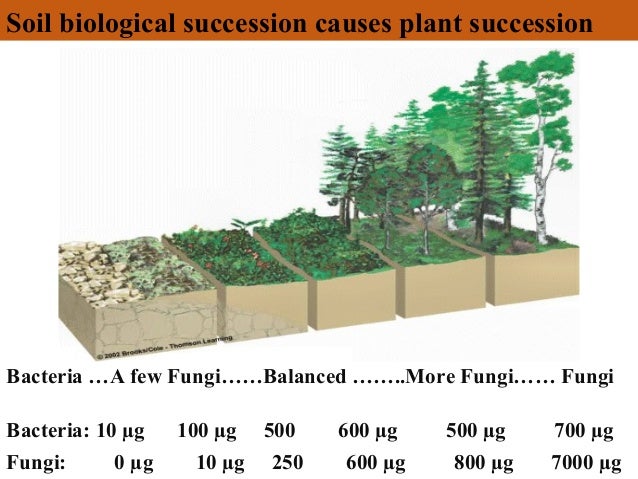
Virgin soil depending on where in the succession it is would have different species living in it and will support different life. From lowest level of complexity where only bacterial life is present and does support simplest vegetation (weeds) to forests. The question is what does live in that soil. What does live on that straw if all that was added was high nitrogen synthetic fertilizer? Species that were in the field where the straw was taken from, blown by wind into it, species that got into the bales on site which ever way. Not all of them will make it. The biodiversity of it... will it be same or different depending on the area? Will be there same bacteria on east coast of USA in the straw in Midwest, on the West coast? What about Northers states versus South? Does that matter? I do not see that covered in any of the podcasts.
If it's the virgin soil then from where? To what type of soil is that compared? Different soils will have different mechanisms of carbon cycling. 
Is that compared to forest virgin soil and what kind of forest broad leaf or pine forests or mixed, or to parries or to meadows and shrubs or to dirt and annual weeds. forests are fungal dominated when dirt with annual weeds is bacteria dominated. It is not clear which one. 
Straw bales start growing mushrooms with time. Do they become high bacterial, high fungal, in between or it depends?
By day 12 that bale start to decompose and become like heated and started to cool down compost would look like at the beginning stages of it, only no one has turned that compost and it is aerobic mostly so hopefully does not breed right bacteria. Hot compost takes about 21 days according to most of the methods, straw bale would be about half way and only inside.
The author talks about planting into that decomposing straw and states that plants will love that bacterial environment. Is that correct from soil biology and plants succession?
I wonder why a strawberry would love high bacterial environment cycling nitrate (that's what that high carbon medium was jump started with) when strawberry is a forest under story plant where the soil is high fungal and bacteria there are oxidizing ammonium. It's like moving strawberry down to succession path more towards mustard...
Is that in the reality about fertilizer fixing everything? I wonder is that does explain why field applications do report failures. 

He references that he has observed thistles growing out of the straw bales.
That one is interesting... and clear cut from modern soil scientists. Thistle is the first stage of the weed plants, first stage of the succession thriving in high bacterial dominated soils, that's what the weeds use and call for.
Related image

So where is he in the ecological succession and soil biological succession?
Thistles are early succession perennial weeds that come after the annual weeds, grasses and lichens on bare rock/eroded rock. The method is recommended as soil alternative for abused weeds growing sold aka dirt.

Image result for elaine ingram soil succession

Straw will grow fungi, however 12 days is not enough for that, that puts us right there in the beginning of the succession. And that fact would explain why this method relying of fertilizers heavily after. Strawberry, tomatoes, cucumbers and many other annuals (strawberry is a perennial in my climate) are higher on the biological succession, they do call for the different sets of nutrients and the biology in the soils compared to weeds and brassica (think radish, kale, cabbages) and amaranthaceae (thing chard, beats...).
Do tomatoes like high bacterial young compost? I found mine like older compost better. But zucchini do love young compost piles rather well.

About his original site... Pines, if not all was killed there then he should not be needing straw bales